
The evolution of surface engineering processes has led to the development of increasingly sophisticated solutions for protecting industrial assets in extreme operating environments. Among these, High Velocity Arc Spray (HVAS) technology stands out as one of the most effective methods for the deposition of high-performance metallic coatings.
HVAS technology represents the pinnacle of evolution of electric arc spraying (Twin Wire Arc Spray), where the integration of supersonic acceleration systems radically transforms the deposition dynamics and microstructure of the resulting coating. This report examines in detail the physical principles, metallurgical characteristics, and strategic applications of HVAS, with a particular focus on the oil & gas and petrochemical sectors.
Physical Foundations and Mechanisms of HVAS Technology
High Velocity Arc Spray technology is based on the principle of ohmic heating and the formation of an electric arc between two consumable wires. HVAS uses exclusively electrical energy to melt the filler metal and compressed air to atomize and accelerate the particles.
Electric Arc Dynamics and Material Melting
The HVAS process begins with the continuous advance of two metal wires, acting as electrodes, toward a common meeting point. A direct current (DC) potential difference is applied to the wires, igniting an electric arc at the point of contact. The temperature within the arc can exceed 4,000°C, instantly melting the ends of the wires. The stability of this arc is critical to ensuring a constant flow of molten material and depends on the precision of the wire feed system and the electronic control of voltage and current.
In an HVAS system, arc management is optimized to produce extremely small molten metal droplets. This is made possible by the spray head configuration, which directs the airflow in such a way as to minimize the surface tension of the droplets as they detach from the wires.
Supersonic Acceleration and the De Laval Nozzle
The fundamental distinction between traditional arc spraying and HVAS lies in the atomization system. HVAS uses a convergent-divergent nozzle, known as a De Laval nozzle, which accelerates the compressed air to supersonic speeds.
As air passes through the converging section of the nozzle, its velocity increases while the pressure decreases. Upon reaching the nozzle's "throat," the air reaches the speed of sound (Mach 1). In the diverging section, the expansion of the gas transforms the residual pressure energy into kinetic energy, driving the flow to supersonic speeds. Molten metal is injected into this flow, where it undergoes violent secondary atomization that fragments the droplets into very fine particles, which are accelerated toward the substrate at speeds that can reach and exceed 800 m/s.1
Technical Parameter |
traditiona Arc Spray |
High Velocity Arc Spray (HVAS) |
Heat Source |
Electric Arc |
Electric Arc |
Acceleration Mechanism |
Compressed Air (Subsonic) |
De Laval Nozzle (Supersonic) |
Particle Velocity |
< 150 m/s |
300 - 800+ m/s |
Drop Size |
Coarse |
Fine / Ultrafine |
Kinetic Energy at Impact |
Low |
Very High |
Substrate Temperature |
< 150°C |
< 100°C (typical) |
The high kinetic energy of HVAS particles ensures that, upon impact with the substrate, they undergo massive plastic deformation. This phenomenon, called "splat formation," is responsible for the coating's exceptional density and superior adhesion.

Materials Science: Flux-Cored Wires and Specialized Alloys
One of the most significant advantages of HVAS technology is the flexibility in choosing filler materials. The introduction of cored wires has allowed for the depositing of composite materials and cermets, expanding the protective potential of the process..
Cored Wire Engineering
Flux-cored wires consist of a small outer metal tube (sheath) filled with a mixture of metal powders, carbides, or oxides. During the HVAS process, the sheath melts in the electric arc, acting as a matrix, while the powdered core is carried within the molten metal flow.
- Tungsten Carbide (WC) Coatings: Using tungsten carbide-rich cored wires, HVAS can produce coatings with hardnesses exceeding 1000 HV0.3, ideal for resisting severe erosion.
- Amorphous and Nanocrystalline Alloys: Some flux-cored wires are formulated to generate glassy or nanocrystalline structures during rapid post-impact cooling, offering very high resistance to corrosion and wear.
High Performance Alloys for the Petrochemical Sector
In the Oil & Gas sector, the choice of material is dictated by the need to resist acidic fluids and high temperatures.
- Ni-Cr-Mo superalloys (Inconel 625, Hastelloy C-276): These alloys are essential for corrosion protection in the presence of H2S, CO2, and chlorides. HVAS allows for the deposit of dense layers with minimal porosity.
- Special Stainless Steels (316L, 430): Used for general corrosion protection and for the dimensional restoration of worn components.
- Cobalt-based alloys (Stellite): Used for components subject to contact wear and high-temperature erosion.
Performance Analysis: Density, Adhesion and Structural Integrity
The reliability of an HVAS coating depends on its ability to prevent the passage of corrosive agents through its structure.
- Porosity and Permeability
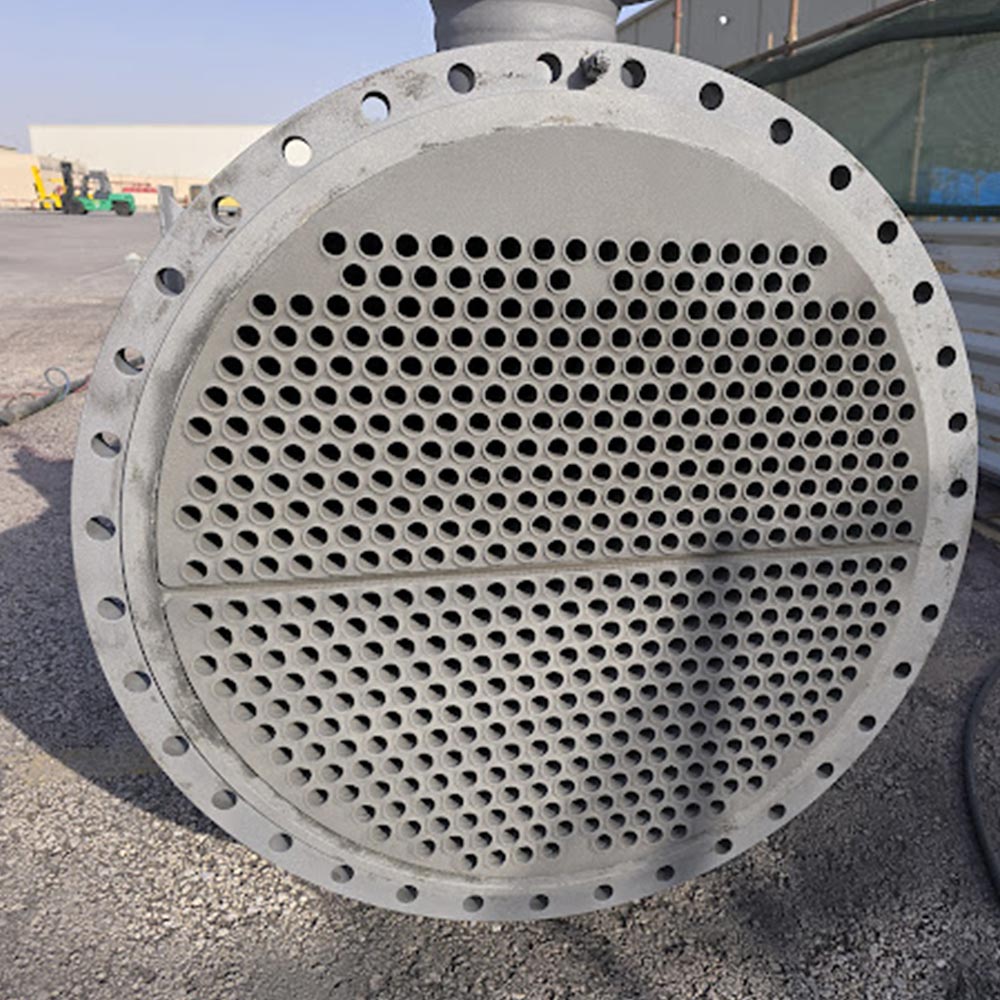
HVAS coatings typically have porosity levels of less than 2%. This density is the result of dynamic compaction: each particle impacts the surface with such force that it "smears" the molten material into every microscopic asperity, creating a gas-tight barrier, essential for protecting pressure vessels and heat exchangers.
- Bond Strength
HVAS generates a superior mechanical bond due to its high kinetic energy. Tests conducted according to ASTM C633 show bond strength values exceeding 35 MPa (5,000 psi), often achieving excellent performance on properly prepared steels. - Low Heat Input and Absence of HAZ
Unlike weld overlay, HVAS maintains the substrate at relatively low temperatures, often below 100°C. This “cold process” eliminates the Heat Affected Zone (HAZ), avoiding dimensional distortion and the need for post-weld heat treatment (PWHT).
Strategic Applications in the Oil & Gas Sector
HVAS technology has become a standard solution for protecting critical assets in refineries and offshore platforms.
Protection of Distillation Towers and Pressure Vessels
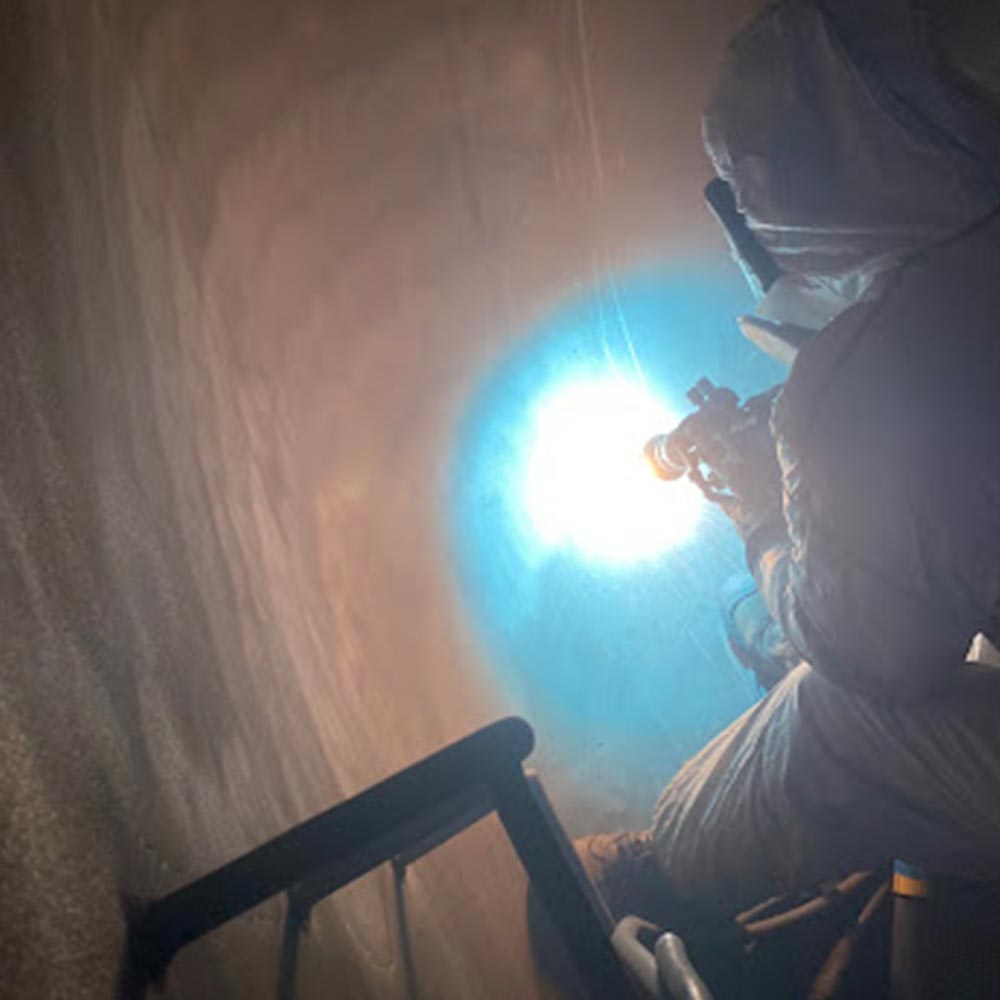
Distillation columns are subject to corrosion from naphthenic acids and sulfidation. Thanks to the portability of HVAS systems, the internal walls can be coated directly in the field during turnarounds, applying NiCrMo alloys that create a resistant barrier, extending the asset's useful life.
Heat Exchangers and Condensers
HVAS protects tube sheets and tube ends from galvanic corrosion and pitting by sealing joints and eliminating corrosion trigger points.
Fluid Catalytic Cracking (FCC) Unit
In FCC units, the application of carbide-based HVAS coatings (WC-Co-Cr) provides the hardness necessary to resist the impact of high-velocity catalyst grains.
On-Site Execution: Logistics and Operational Benefits
The portable nature of HVAS systems allows for rapid interventions in remote environments or confined spaces, such as the interior of industrial vessels.
The Field Intervention Process
A typical intervention follows a rigorous sequence:
- Surface Preparation: Grit blasting up to Sa 3 to ensure mechanical anchoring.
- HVAS Deposition: Use of compact guns to cover large surfaces with high deposition rates (spray rate).
- Inspection: Verification of layer thicknesses and continuity through non-destructive testing.
Reduce Costs and Downtime
The economic impact of HVAS is significant thanks to its execution speed (up to 10-15 kg/h of deposited material) and the possibility of operating without dismantling massive components, drastically reducing logistics costs and plant downtime..
Comparative Analysis: HVAS vs. Alternative Technologies
HVAS vs. Weld Overlay
Unlike soldering, HVAS does not melt the substrate, ensuring:
- Absence of Dilution: The coating maintains its pure chemical properties from the first layer.
- Metallurgical Integrity: No risk of embrittlement or residual stresses in the base metal.
HVAS vs. HVOF (High Velocity Oxygen Fuel)
While both are high-throughput processes, HVAS offers specific advantages for on-site maintenance:
- Operating Costs:HVAS uses compressed air and electricity, eliminating the need for expensive and dangerous oxygen and combustible gases to handle on the jobsite.1
- Versatility: The use of flux-cored wires allows HVAS to compete with powder processes in terms of wear and erosion protection.
Quality and Validation Standards
To ensure the durability of the coating, international protocols are followed:
- Adhesion: ASTM C633 testing for bond strength.
- Microstructure: Metallographic analysis to measure porosity and oxides.
- Hardness: Vickers (HV) cross-sectional measurements to confirm wear resistance.
Conclusions
High Velocity Arc Spray (HVAS) technology represents an excellent solution for surface engineering in the heavy industrial sector. Combining the energy efficiency of the electric arc with the supersonic dynamics of the De Laval nozzle, HVAS offers dense, highly adherent coatings that are technically superior to traditional processes. The ability to perform on-site applications without thermally altering the substrate makes this technology a key pillar for the long-term maintenance and protection of critical assets in the Oil & Gas sector.
Discover the HVAS service
Bibliography
- High Velocity Arc Spraying (HVAS) - Coating Technology, accessed February 9, 2026, https://flamespray.org/HVAS-EN.php
- Thermal Spray Coatings for Corrosion Protection of Continuous Digesters and Flash Tanks - ResearchGate, accesso eseguito il giorno febbraio 9, 2026, https://www.researchgate.net/profile/
- High-Entropy Alloy Coatings Deposited by Thermal Spraying: A Review of Strengthening Mechanisms, Performance Assessments and Perspectives on Future Applications - MDPI, accesso eseguito il giorno febbraio 9, 2026, https://www.mdpi.com/2075-4701/13/3/579
- High Velocity Arc Spray - Specialty Solutions WSI Innovative Coating Technology, accesso eseguito il giorno febbraio 9, 2026, https://www.availinfra.com/high-velocity-arc-spray/
- On-Site Coating with HVAS for Oil & Gas | Flame Spray Corrosion Protection, accesso eseguito il giorno febbraio 9, 2026, https://flamespray.org/on-site-coating.php
- Properties of Wire Arc-Sprayed Fe-Based Coatings - Encyclopedia.pub, accesso eseguito il giorno febbraio 9, 2026, https://encyclopedia.pub/entry/15115
- High Velocity Arc Spray Explained - WSI Technology Spotlight, accesso eseguito il giorno febbraio 9, 2026, https://www.availinfra.com/high-velocity-arc-spray-explained/
- High Velocity Thermal Spray, HVTS® Solution - Integrated Global Services, accesso eseguito il giorno febbraio 9, 2026, https://integratedglobal.com/en/services/on-site-hvts-cladding/
- HVAF vs HVOF Comparison - Metal Spray Supplies Australia, accesso eseguito il giorno febbraio 9, 2026, https://www.metalspraysupplies.com/hvaf-spray-equipment/hvaf-vs-hvof-comparison?showall=1
Bring us your problems, our experience will provide the answers
We support and advise you in selecting the most suitable technology and materials to meet your specific needs.
Contact us now to have an engineer at your disposal, and together, we’ll find the solution to your biggest problems. We understand urgent, an engineer can be immediately available, call us, email us, and if necessary, you’ll have a proposal within 24 hours.