
Thermal spray treatment is currently one of the most effective technologies for improving the surface resistance of components subject to wear, erosion, corrosion, and high temperatures. In this context, carbide powders, and in particular those based on tungsten carbide, have been a benchmark solution for creating high-performance coatings for years.
In recent months, however, the tungsten carbide powder market has seen exceptional price growth, with increases in some cases reaching up to three times the already historically high levels. This trend cannot be interpreted as a normal economic fluctuation, but rather as a sign of a deeper transformation in the global tungsten supply chain, which is increasingly perceived as a strategic and critical material.
For companies using thermal spray to protect mechanical components, pumps, shafts, rollers, valves, seals, or parts exposed to strong abrasion, this scenario requires technical and economic consideration. Today, it's no longer enough to ask which coating offers the greatest hardness: it's also necessary to evaluate raw material availability, medium-term cost stability, supply chain sustainability, and the actual suitability of the solution for the application.
Why are tungsten carbide powders so widely used in thermal spray?
In the world of thermal coatings, tungsten carbide is considered the benchmark for all applications requiring high hardness, resistance to abrasive wear, erosion resistance, and dense microstructures. Systems such as WC-Co and WC-CoCr, applied mainly with HVOF and HVAF processes, allow for coatings with very low porosity, excellent adhesion to the substrate, and high performance even under severe operating conditions.
These characteristics make them particularly suitable for the following sectors:
- oil & gas
- energy
- aerospace
- paper and converting
- metallurgy
- industrial plant engineering
- components for pumps, compressors, and turbines
The main advantage of tungsten carbide powders lies in their ability to combine high surface hardness with good toughness, thanks to the presence of a metal matrix, typically cobalt or CoCr. The result is a coating capable of withstanding intense mechanical stress, minimizing premature wear, plant downtime, and frequent component replacement.
Cosa sta succedendo al mercato del tungsteno
The price increase observed starting at the end of 2025 is due to the overlap of several structural factors. The global tungsten supply chain is highly concentrated, with China predominating in mining and refining. This concentration makes the market particularly sensitive to production limitations, regulatory decisions, and geopolitical tensions.
Among the main causes of the price increase are:
- Structural constraints on supply
In recent months, several factors that reduce the flexibility of the supply chain have intensified: decreasing extraction quotas, stricter environmental regulations, closure of small and medium-sized processing plants, reduction in the average quality of available minerals, and increasing production costs related to energy, labor, and compliance. - Export restrictions and geopolitical factors
The introduction of export controls and authorization systems on tungsten-containing materials has reduced availability outside domestic markets, generating longer lead times, greater administrative complexity, and significant price divergence between domestic and foreign markets. At the same time, geopolitical tensions and restrictions on alternative suppliers have increased dependence on a limited number of producers. - High and non-cyclical demand
Unlike other industrial commodities, tungsten demand is supported by structural, not simply cyclical, drivers. Sectors such as aerospace, energy, defense, tools, and advanced components continue to require materials with properties that are difficult to substitute, making demand relatively insensitive to price increases. - Logistical effects and market reactions
Added to these factors are rising logistics costs, precautionary stockpiling policies, and temporary supply disruptions, which have amplified volatility and accelerated price surges.
The impact on thermal spray coatings
For companies using tungsten carbide coatings, the immediate consequence is an increase in the total cost of treatment. When the powder represents a significant portion of the final cost of the coating, the volatility of the raw material quickly affects maintenance budgets, industrial cost predictability, and supply planning.
This aspect is particularly critical when:
- the treated component has high volumes or large surfaces
- the restoration cycle is frequent
- the supply contract requires stable prices over time
- the application does not truly require the maximum performance level offered by the WC
In many cases, therefore, it becomes strategic to review the technical specifications to understand whether the coating currently used is truly indispensable or whether alternative solutions exist that guarantee the right balance between performance, cost, and continuity of supply.
When it still makes sense to choose tungsten carbide
Despite the market environment, tungsten carbide continues to be the preferred choice in the most demanding applications. This is especially true where the top priority is maximum abrasion and erosion resistance, requiring extremely compact, high-hardness coatings obtained with HVOF or HVAF processes.
In scenarios involving severe wear from solid particles, intense fretting, or repeated contact in aggressive conditions, WC-Co and WC-CoCr systems often remain the benchmark. However, even in these cases, it is important to avoid overspecification: not all operating conditions require the maximum level of hardness available, and a careful application analysis can highlight significant margins for optimization.
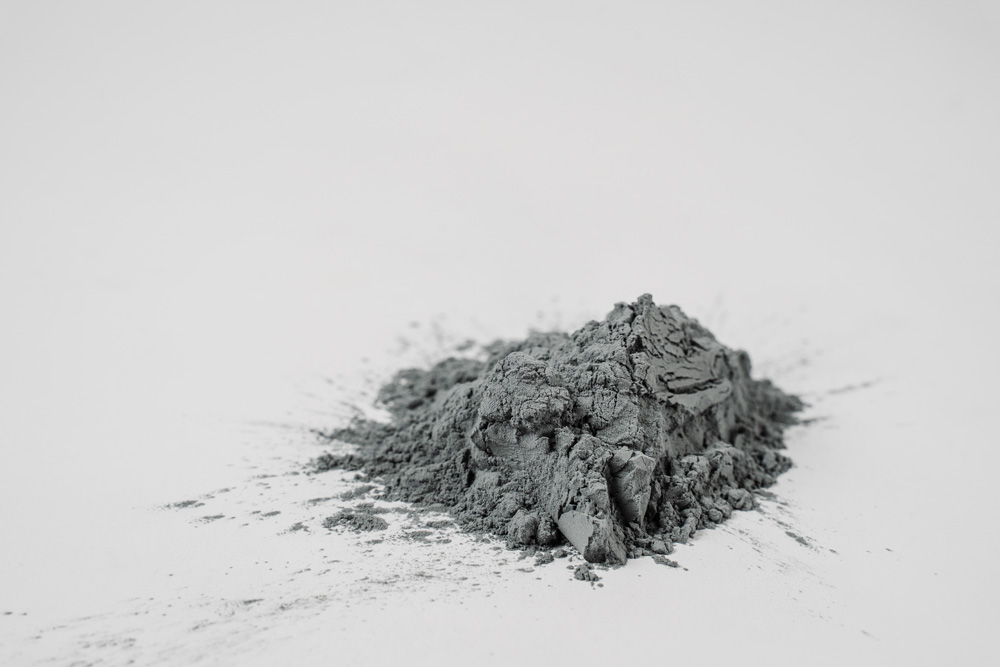
The main technical alternatives: chromium carbide and hybrid solutions
To address the growing instability of tungsten, many companies are increasingly considering alternative solutions. Among these, one of the most consolidated is chromium carbide, particularly in Cr3C2-NiCr systems.
Chromium carbide: when is it worth it?
Chromium carbide-based coatings offer good wear and erosion resistance, but are especially distinguished by improved high-temperature stability and more predictable raw material cost stability. They are particularly suitable for applications where oxidation resistance and thermal behavior are more important than maximum hardness.
This makes them attractive for components operating in hot environments, subject to oxidation, or exposed to prolonged thermal stress, where the goal is not only to combat wear but also to preserve the coating's properties over time.
WC / CrC Blends: The Advanced Compromise
Another promising approach is represented by hybrid blends that combine tungsten carbide and chromium carbide. These formulations reduce the dependence on tungsten, simultaneously modulating hardness, thermal stability, and overall system cost.
Blends are particularly attractive when the application requires a balance between mechanical strength and temperature behavior, without the need to push towards the maximum performance typical of pure toilet linings. In other words, they are an intermediate solution with high technical value, often capable of improving the cost-performance ratio.
Technical comparison of the main cladding options
Based on the attached outline, it is possible to summarize the main differences between the three most relevant coating families:
WC-Co / WC-CoCr
These systems offer typical hardness between approximately 1100 and 1400 HV0.3, excellent abrasion and erosion resistance, very dense microstructures, and extremely low porosity. However, they are more sensitive to decarburization, moderate oxidation resistance, and low raw material cost stability.
Cr3C2-NiCr
Hardness typically ranges between 900 and 1100 HV0.3. Wear resistance is good, particularly under moderate abrasion conditions, while high-temperature behavior is very favorable, up to approximately 850–900 °C. Oxidation resistance is also high, and raw material costs tend to be more stable.
WC / CrC Blends
Hybrid blends typically fall within a hardness range of 1000 to 1200 HV0.3, with good to very good wear performance, improved high-temperature behavior compared to traditional WC systems, and generally intermediate cost volatility. They are a particularly suitable solution for "mixed" applications, where wear, temperature, and the need for cost control coexist.
Property / Aspect |
WC-Co / WC-CoCr |
Cr3C2-NiCr | WC / CrC Blends |
Typical hardness (HV0.3) |
1100 – 1400 |
900 – 1100 | 1000 – 1200 |
Wear resistance |
Excellent (abrasion, erosion) |
Good (moderate abrasion) | Good to very good |
High temperature behavior |
Limited (binder oxidation) |
Very good (up to ~850–900°C) | Improved vs WC |
Oxidation resistance |
Moderate |
Very good | Good |
Coating density (HVOF/HVAF) |
Very high (<1% porosity) |
High | High |
Sensitivity to decarburization |
High |
Lower | Intermediate |
| Raw material cost stability | Low (high volatility) | Higher (more stable) | Medium |
| Typical applications | Severe wear, erosion, sliding | High temp wear, oxidation environments | Mixed wear + temperature |
The real key: choosing the coating based on the application
One of the most common mistakes in surface coating design is using a "standard" solution for very different applications. In thermal spray, however, technical success depends on the ability to precisely define:
- prevalent wear mechanism
- operating temperature
- chemical environment and risk of oxidation
- component geometry
- required dimensional tolerances
- expected service life
- economic and supply constraints
A component exposed to high-velocity fine-particle erosion may require a different approach than one subjected to metal creep, coarse abrasion, or repeated thermal cycling. In some cases, tungsten carbide remains irreplaceable; in others, a chromium carbide coating or a hybrid formulation may provide adequate performance with greater cost-effectiveness.
Thermal spray, production continuity, and risk management
Today, the issue is not just about coating performance, but also about supply chain resilience. The heavy dependence on critical raw materials requires companies to take a broader view: the choice of coating must reduce the risk of production downtime, exposure to market volatility, and the vulnerability of the entire supply chain.
In this context, an advanced technical strategy should include:
- constant monitoring of the powder market
- preventive qualification of alternative materials
- validation of spray processes and parameters
- comparative verification of actual performance
- revision of specifications to eliminate any overspecifications
This approach allows you to proactively address market issues, avoiding emergency decisions when the cost or availability issue has already become urgent.
A more effective technical approach: test, compare, qualify
The transition from tungsten carbide powder to an alternative solution cannot be approached purely theoretically. It requires concrete application work, including laboratory tests, metallographic analyses, hardness measurements, adhesion tests, porosity characterization, and, above all, in-service testing.
The goal should not be simply to reduce the cost of the powder, but to identify the system best suited to the actual risk profile of the component. In many cases, the optimal solution is not the one with the highest possible hardness, but rather the one that guarantees the best balance between performance, durability, total cost, and availability over time.
Carbide powders for thermal spray, and in particular those based on tungsten carbide, remain central to the creation of high-performance wear-resistant coatings. However, the recent market scenario has made it clear how dependence on a critical raw material can impact not only the cost of the coating, but also a company's entire production and maintenance strategy.
For this reason, today more than ever, the choice of coating must be guided by an in-depth technical evaluation of the application. Where tungsten is truly necessary, its use must be managed wisely. Where operating conditions allow, alternatives such as chromium carbide or WC/CrC blends can offer a concrete opportunity to improve cost stability and reduce supply risk without compromising the functionality of the component.
In an evolving market, value lies not only in knowing how to apply a coating, but in knowing how to identify the most suitable, most efficient, and most sustainable solution for each specific industrial need.
Sectors concerned:
Reference technologies:
Bring us your problems, our experience will provide the answers
We support and advise you in selecting the most suitable technology and materials to meet your specific needs.
Contact us now to have an engineer at your disposal, and together, we’ll find the solution to your biggest problems. We understand urgent, an engineer can be immediately available, call us, email us, and if necessary, you’ll have a proposal within 24 hours.